Houseboat guide
Houseboats in Kashmir: The Complete Guide
How the boats are built, what the rooms are like, what a stay includes and how to be a good guest on someone else’s water.
A Kashmiri houseboat is a wooden house that floats. It does not move, it is not a cruise, and it is not a hotel room with a view of water. It is a building on a hull, moored in one place, usually run by the family that owns it. This guide explains how they came about, how they are made, what the rooms are like, what a stay includes, and how to be a good guest.
What a houseboat actually is
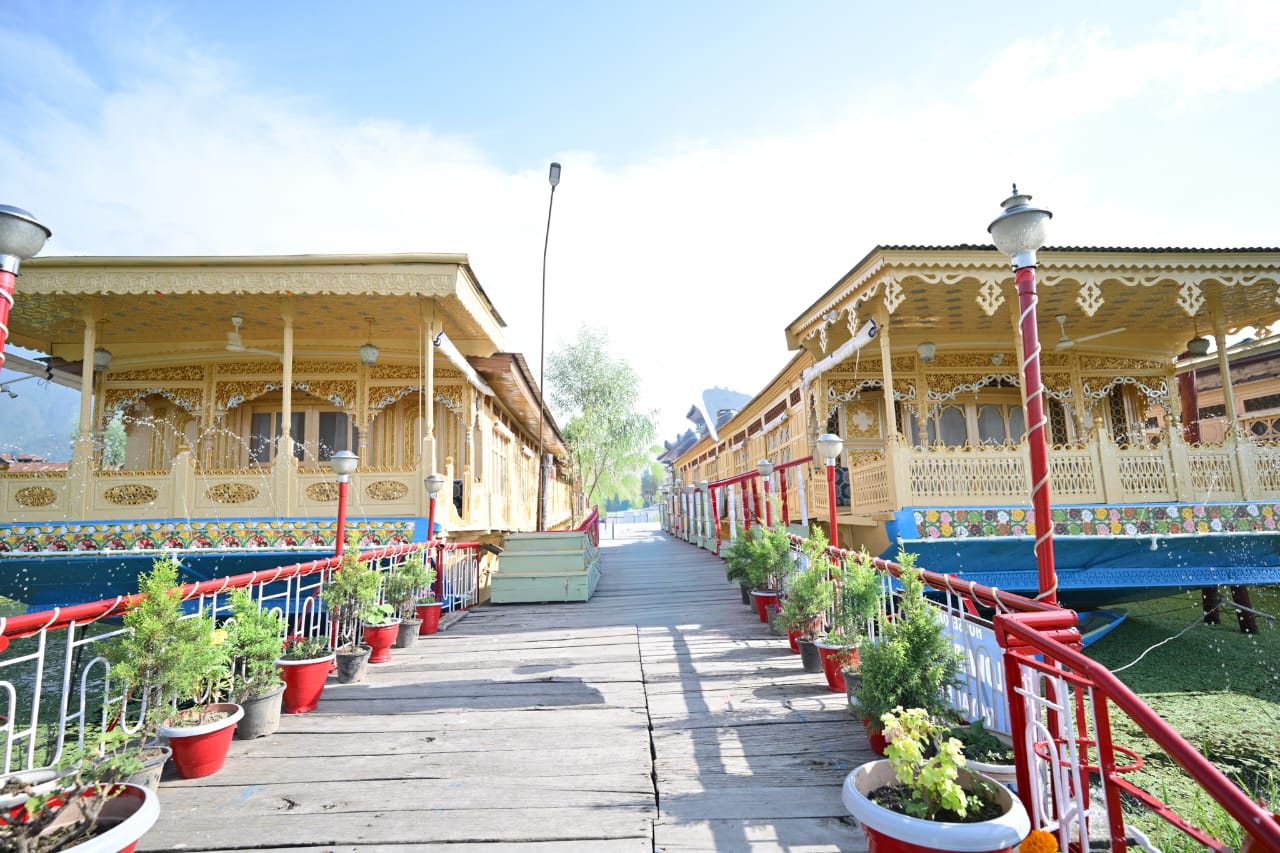
Picture a long, single-storey timber house, roughly the width of a corridor and several rooms deep. At the front is a verandah open to the lake, then a sitting room, then a dining room, then bedrooms leading off a passage, each with its own bathroom. On top there is often a flat sundeck. The whole thing sits on a broad wooden hull and is tied to the shore or to piles in the lake.
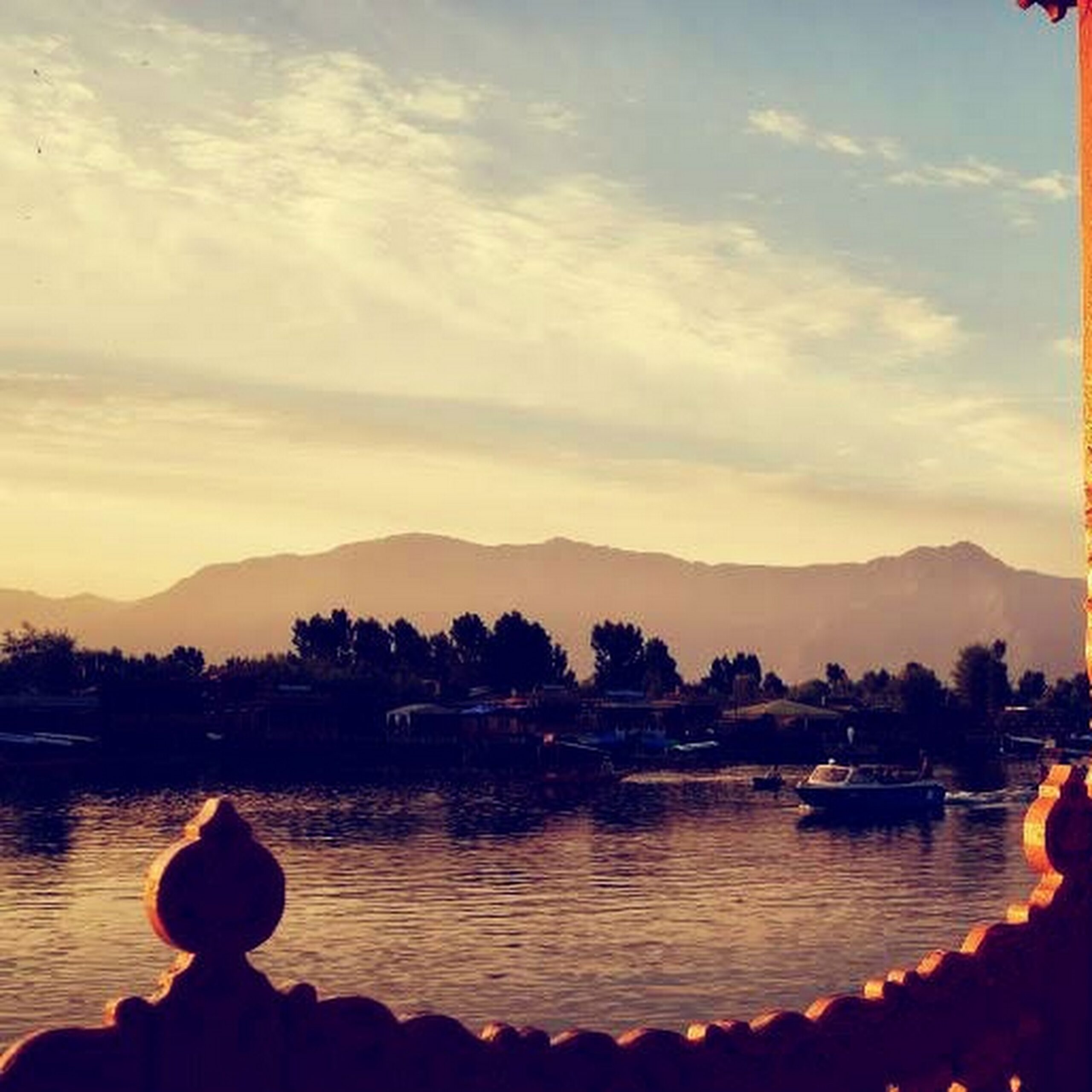
Because the boat is moored, you are not exposed to motion in any meaningful way. What you do get is water on both sides, kingfishers and herons in the morning, shikaras passing, and complete quiet after dark once the last boats have gone in.
Access is by water. Most boats are reached by a short shikara crossing from a numbered ghat on the boulevard or at Nigeen; a few sit against the bank and are reached on foot. Which of the two applies is worth knowing before you arrive with luggage.
How they are built
The structure is timber throughout. Deodar cedar is the traditional choice for the hull and frame, because it resists water and insects and is durable in the valley climate. The interiors are where the craft shows: walnut, which Kashmir has worked for centuries, carved into panelling, ceilings, screens, tables and beds.
You will see the carving in several forms. Deep relief with chinar leaves and vines; lattice screens, called pinjrakari, made of interlocking pieces of wood without nails; and the fine ceiling work known as khatamband, small pieces of wood fitted into geometric patterns so that they can expand and contract without splitting.
Textiles do the rest. Crewel, the chain-stitch embroidery worked with a hook on cotton or wool, appears on curtains, cushions and upholstery. Floors are often covered with namda or with Kashmiri carpets. The result is warm and dark in the best sense, and it is the reason interiors that are decades old still look right.
All of this needs maintaining. Timber on water requires constant attention, which is why the standard of a boat depends far more on the family looking after it than on its category label.
Room types and categories
Houseboats in Srinagar are grouped into categories — standard, deluxe and luxury are the terms you will see most — and the category is a guide to the fit-out and facilities rather than a guarantee of any particular thing. Within one boat, rooms also differ.
- Lake-facing rooms sit toward the front, with windows onto open water. These are the rooms people remember.
- Middle and rear rooms are usually a little cheaper and quieter, with views onto the bank or a channel.
- Family rooms and adjoining pairs suit groups who want to be together.
- Whole-boat bookings are possible on most boats, and are the right choice for a family or a group of friends who want the sitting room and verandah to themselves.
Facilities vary by boat: heating in the colder months, hot water, Wi-Fi of variable strength, and a sundeck. Because none of this is standard across the lake, we list facilities boat by boat rather than by category.
Houseboat stays
See the boats and their rooms
We know six houseboats on Dal Lake personally, and 657 are registered on the lake with the Kashmir Houseboat Owners Association, so others can be arranged on request. Tell us your dates and we will send options with rates.
What a stay includes
This is the part most worth pinning down, because it differs from boat to boat. Typically a stay includes the room, bedding and towels, the use of the shared sitting room, dining room and verandah, and the shikara transfer between the ghat and the boat.
Meals are usually offered on board and cooked in the boat kitchen, often Kashmiri dishes alongside standard Indian and continental food. Some boats quote a room-only rate and charge meals separately; others include breakfast, or breakfast and dinner. Neither is better, but you should know which you have agreed.
Things that are usually extra: shikara rides beyond the transfer, day trips and cars, laundry, and anything bought from the vendor boats that come alongside. Confirm all of it in writing before you arrive. Our guide on how to book a houseboat lists exactly what to get confirmed.
Etiquette on board
A houseboat is someone's livelihood and often adjoins their home. A few things make the stay better for everyone.
- Take your shoes off where you are asked to, which is usually at the verandah.
- Say yes or no clearly to the vendor boats. A polite refusal is understood; a vague answer is read as interest and they will wait.
- Ask before photographing the crew, the family or neighbouring boats.
- Keep noise down after dark. Sound carries a long way across still water and other boats are close.
- Nothing goes into the lake. The lake is under long-term conservation work and the boats depend on it.
- Dress modestly when you go ashore, particularly around the old city and the shrines.
- If meals are included, tell the kitchen your timings in the morning. Food is cooked to order, not held on a buffet.
Where they came from
The valley has a long tradition of living on water. The doonga, a covered cargo and family boat, was in use on the lakes and rivers well before houseboats existed, and the boat-dwelling communities of Dal Lake still farm the floating gardens.
The houseboat as we know it developed in the second half of the nineteenth century, when visitors under the British could not own land in the princely state of Jammu and Kashmir. Building a comfortable home on the water was the way around that, and the boats became progressively more elaborate as a result. Many of the boats moored today have been in the same families for generations.
Beyond that outline, a great deal of what is repeated about individual boats and dates is not documented, so we leave it out rather than pass it on.
If you want the lake itself explained — the ghats, the channels, the floating market — read our Dal Lake guide, and if you are weighing up where to moor, Dal Lake or Nigeen Lake compares the two.