Choosing a lake
Dal Lake or Nigeen Lake: Which Houseboat Stay Suits You
Two lakes a few kilometres apart, the same houseboat tradition, and two genuinely different weeks. Here is how to choose between them.
Both lakes are inside Srinagar, both have traditional houseboats, and both are reached by shikara. They are only a few kilometres apart, and yet a week on one is a noticeably different holiday from a week on the other. This guide sets out the difference honestly, so you can choose the lake before you choose the boat.
Two lakes, one city
Dal Lake is the large, famous one: a broad sheet of water below the Zabarwan hills, divided by causeways into basins, fringed by the boulevard on one side and by floating gardens and water villages on the other. Nigeen Lake lies to its north, connected to it, smaller and more enclosed, with willows along the banks.
Because they are joined and close together, you are not choosing between different parts of Kashmir. You are choosing between the front row and a quieter seat.
What Dal Lake is like
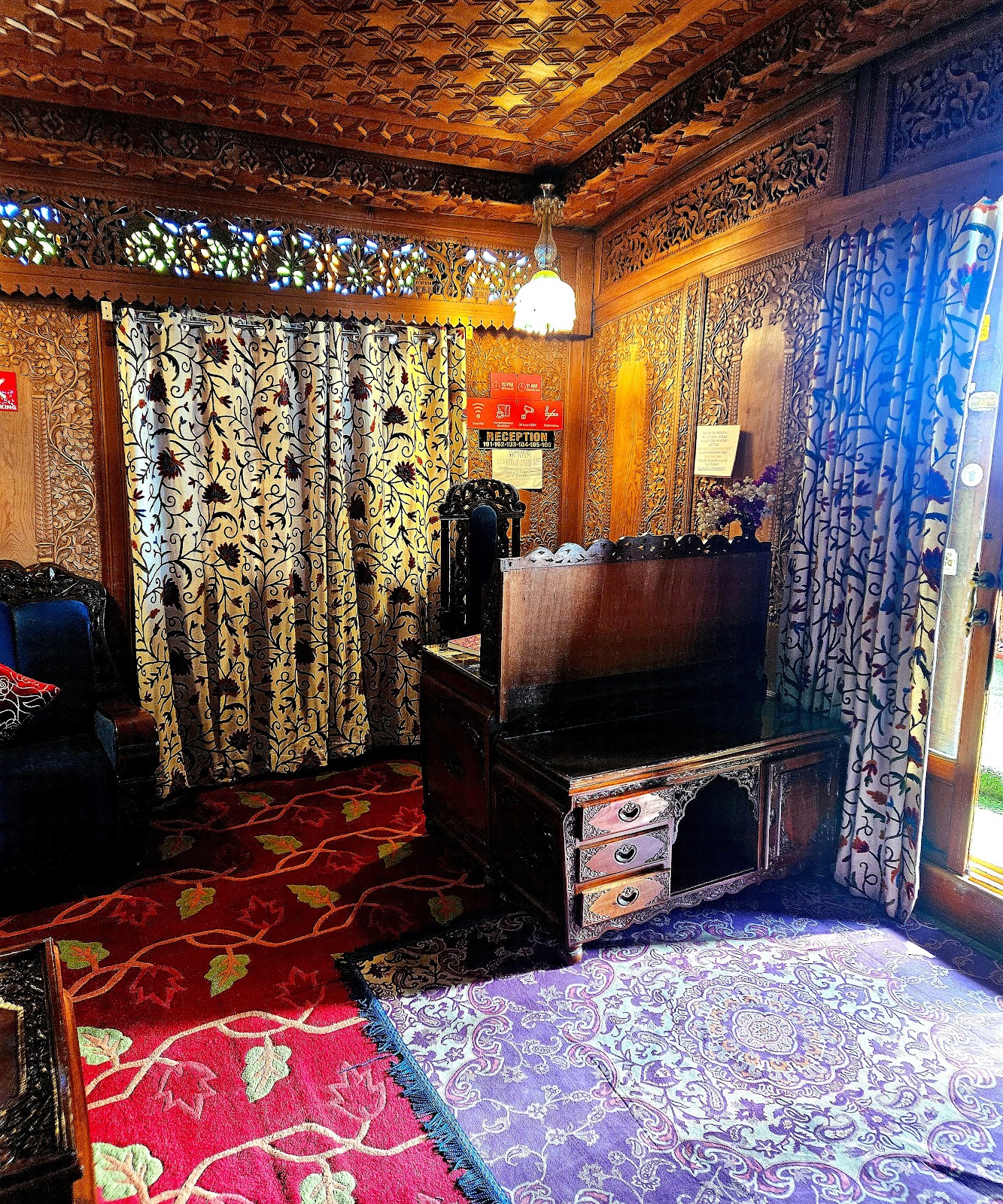
Dal is alive. From early morning the water carries shikaras taking children to school, vegetable growers heading in from the floating gardens, vendors, and later in the day a steady stream of visitors out on rides. The boulevard runs along one edge, so restaurants, shops and taxis are a few minutes away, and the Mughal gardens, the old city and Shankaracharya are all short drives from the ghats.
Staying here means you are part of the scene rather than watching it. The compensation for the traffic is convenience and atmosphere: the floating market before dawn, the lotus beds in summer, the sheer amount happening within sight of your verandah.
It is the natural choice for a first trip to Kashmir, for a short stay where sightseeing matters, and for anyone who would rather have life around them than silence. Our Dal Lake guide covers the layout, the ghats and the market in detail.
What Nigeen Lake is like
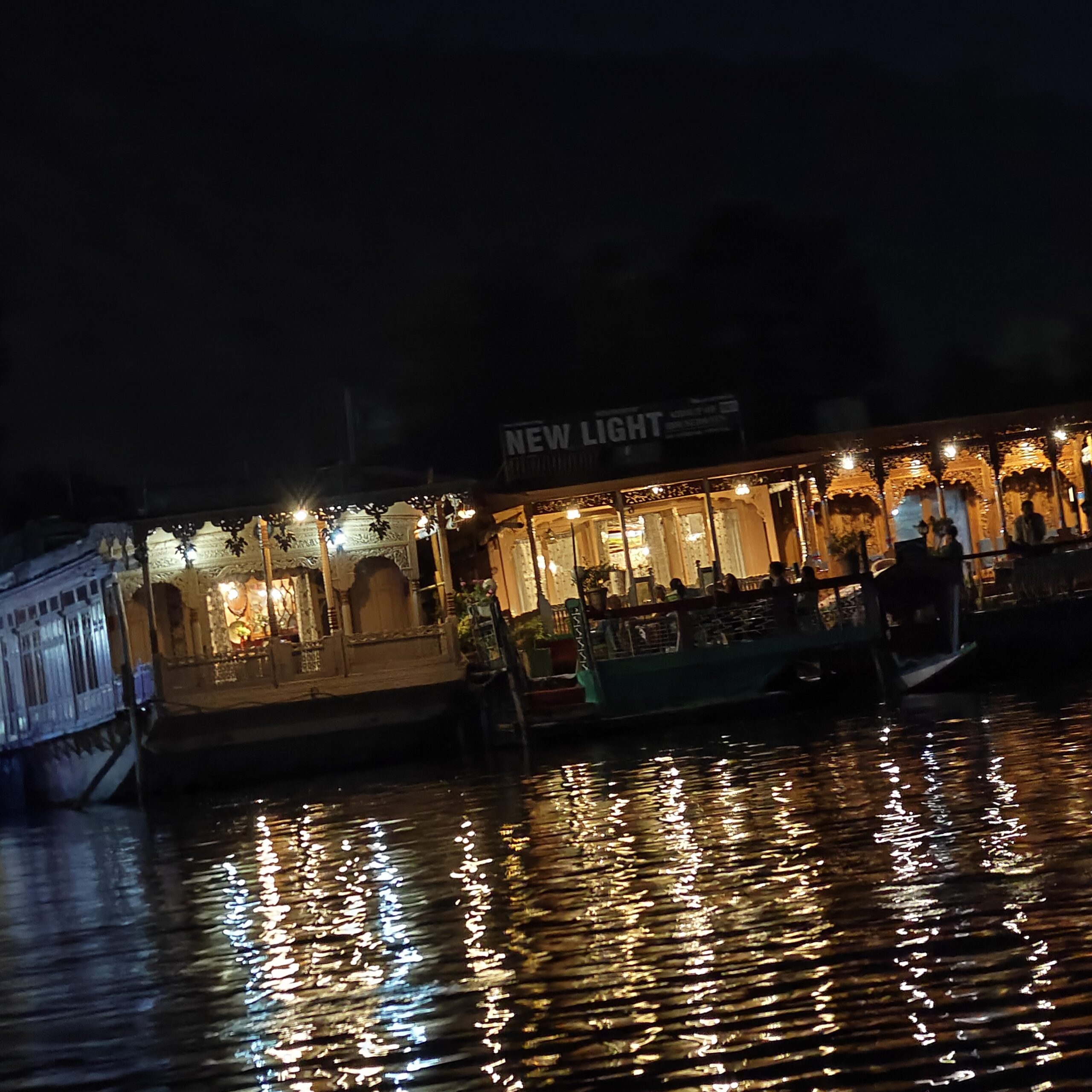
Nigeen is the same tradition at a lower volume. Fewer boats pass, the banks are closer, and there are long parts of the day when nothing moves on the water at all. The water is deeper and clearer than in much of Dal, and the lake has a reputation among residents as the swimming lake.
You give up a little convenience. You are a few minutes further from the boulevard, there is less to walk to, and fewer boats means fewer vendors — which some guests count as a gain. What you get is genuine quiet: birds in the willows, a flat sheet of water at dusk, and very dark, very still nights.
It suits second visits, longer stays, people travelling to rest rather than to tick things off, and families with small children who would rather not be on the busiest stretch of water.
Side by side
| Dal Lake | Nigeen Lake | |
|---|---|---|
| Character | The best-known lake in Srinagar, busy and sociable | Quieter and more enclosed, with less passing traffic |
| Setting | Along the boulevard, below the Zabarwan hills | North of Dal, ringed by willows and residential lanes |
| Boat traffic | Constant shikaras, vendor boats and day visitors | Occasional boats, long stretches of stillness |
| Number of houseboats | 657 registered with the Kashmir Houseboat Owners Association | A smaller cluster of boats |
| Reaching the city | Shortest hop to the boulevard, gardens and old city | A few minutes further out by road |
| Swimming | Not generally done from the houseboats | Water is deeper and clearer; some guests do swim |
| Suits | First visits, sightseeing, people who want life around them | Return visits, long stays, readers, families with small children |
| Evenings | Lights along the boulevard, boats moving until late | Dark, still and quiet early |
Houseboat stays
Choose your lake, then your boat
We know six houseboats on Dal Lake personally, and can arrange a stay on others on either lake on request. Send your dates and we will send named boats and rooms with rates.
Which one should you pick
A short answer for each of the common cases.
- First time in Kashmir, three or four nights. Dal. You want the density, and you want to be close to everything you have come to see.
- Honeymoon or a quiet week. Nigeen, unless you specifically want the busier setting.
- Photography. Both, for different reasons: Dal for the market, the gardens and human activity, Nigeen for still reflections at dawn and dusk.
- Travelling with elderly parents. Either, but ask for a boat close to the ghat with a short, easy crossing.
- Small children. Nigeen, for quieter water and fewer passing boats.
- Winter. Whichever boat is properly heated. In January the heating matters far more than the address.
How each lake changes with the season
The gap between the two narrows and widens through the year, which is worth knowing if your dates are already fixed.
Spring. Both lakes are clear and cold after the winter, and both are busy — this is the peak arrival season, and Dal in particular carries a lot of day traffic once the tulip garden opens.
Summer. The difference is at its widest. Dal is at its most crowded and at its most interesting, with the lotus beds in flower and vendor boats working all day. Nigeen stays comparatively calm, and the swimming is at its best.
Autumn. The best compromise. Visitor numbers fall after the middle of October, so Dal quietens down and starts to feel like Nigeen, while the chinars turn along both shores. Mornings on the water are cold and the light is worth getting up for.
Winter. Both lakes go still and largely empty, and the choice stops being about atmosphere and becomes about the boat: whether it is properly heated, how sheltered the mooring is, and how short the crossing from the ghat is in the cold. Our month-by-month guide goes through the whole year.
Practical differences
A few things that are easy to overlook.
Getting to and from the boat. Both lakes are reached by shikara from a ghat. On Dal the boulevard ghats are numbered and taxis wait at them; at Nigeen the access points are quieter and it is worth agreeing a pickup time rather than expecting to find a car.
Vendor boats. Common on Dal, much less so on Nigeen. Neither is a problem if you say no clearly, which is covered in our guide on how to book a houseboat.
Eating out. On Dal you can go ashore for dinner easily. On Nigeen most guests eat on board, so confirm the meal arrangement with your boat before you arrive.
Noise. Dal is livelier in the evening; Nigeen goes quiet early. Sound travels a long way over water on both lakes, which cuts in your favour on Nigeen and against you on a busy stretch of Dal.
If you are still unsure, tell us what your days are likely to look like and we will say which lake we would put you on. It is a five-minute conversation and it changes the whole stay.