A Kashmiri houseboat is not a hotel room that happens to float. It is a wooden house, usually run by the family that owns it, moored a short shikara ride from the road. That changes the rhythm of the day in ways photographs do not show.
This guide walks through a stay in the order you will experience it, so that nothing on arrival is a surprise. It describes what is typical across boats on Dal Lake and Nigeen Lake — individual boats vary, and where they vary we say so rather than pretending there is one standard.
In short
- You reach the boat by a short shikara transfer from a lakeside ghat, not by car.
- Rooms are carved wood, warmer and darker than a hotel room, usually with a private bathroom.
- Meals on board are the norm rather than the exception, and Kashmiri food is the default.
- Evenings are quiet, and the front deck is where the stay actually happens.
- Wi-Fi, heating and hot water exist on most boats, but the standard varies boat to boat.
Arriving: the ghat and the shikara transfer
Houseboats are moored on the water, so the last leg of your journey is always by boat. You will be directed to a numbered ghat on the boulevard or the Nigeen side, where a shikara — the flat, canopied wooden boat that does everything on these lakes — meets you and takes you across. The crossing is usually two to ten minutes depending on the mooring.
This matters for planning in three ways. Luggage has to be handed down into a low boat, so a single large case is harder than two small ones. Late-night arrivals are possible but the transfer is slower and darker, so it is worth telling us your flight time. And if anyone in your group has limited mobility, say so in advance: some moorings are much easier to board than others.
Practical tip
Send us your arrival time and flight number with your enquiry. We pass it to the boat so the shikara is waiting rather than called for after you get there.
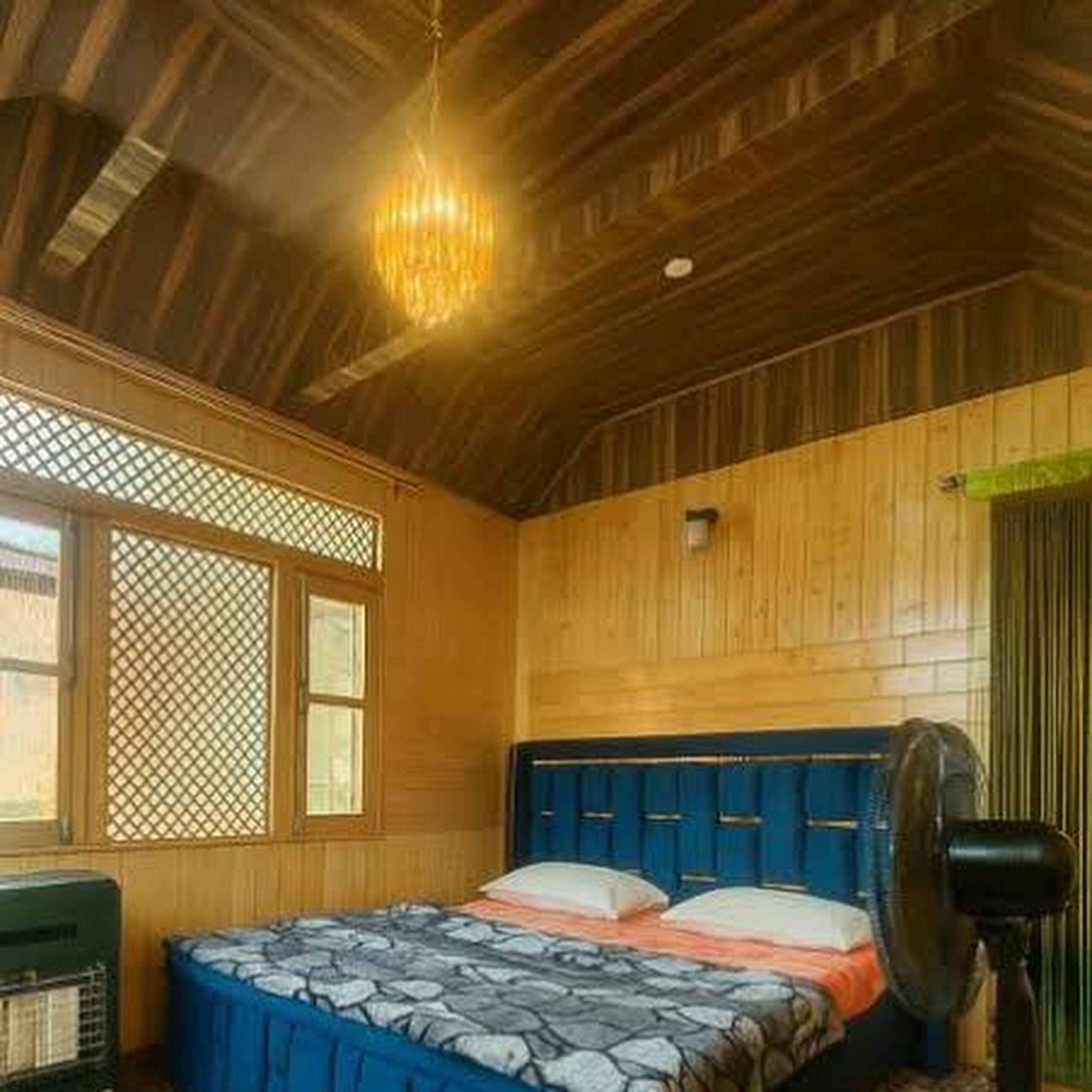
The rooms, honestly described
A typical houseboat has two to four bedrooms opening off a central corridor, with a dining room and a sitting room at the front and a verandah beyond that. The woodwork is the point: walls, ceilings and furniture in carved cedar and walnut, often decades old, with Kashmiri rugs and crewel-embroidered fabric.
Compared with a hotel room of the same price, expect more character and less uniformity. Rooms are often darker, because windows are smaller and the wood absorbs light. Floors creak. Nothing is quite square. Most rooms have their own bathroom with a shower and a hot-water supply, though the pressure and the heating method vary — on some boats it is instant, on others a geyser that needs a few minutes of notice.
What differs between categories
Budget and standard
- Smaller rooms, simpler bathrooms
- Often a side view rather than open water
- Clean and warm, fewer extras
- Frequently a shared boat with other guests
Premium and luxury
- Larger rooms, better bathrooms and heating
- Lake-facing windows and better positions
- More attentive service on board
- Whole-boat stays more often possible
If a lake-facing room matters to you, ask for it specifically when you enquire — it is one of the most common things guests wish they had mentioned. Our guide to houseboat facilities goes through the checklist in detail.
Meals on board
Most guests eat on the boat, and on many boats that is simply how it works: the kitchen is at the back, the family cooks, and meals appear in the dining room at the times you agree. Breakfast is usually included or nearly always available; lunch and dinner are commonly arranged as a package for the stay.
The default food is Kashmiri and North Indian — rice, rogan josh, dum aloo, haak greens, and the local bread in the morning with salt tea or kahwa. Vegetarian meals are entirely normal and easy. If anyone in your group has a serious allergy, tell us in the enquiry so the boat knows before you arrive rather than at the table.
Practical tip
Agree the meal arrangement before you check in, not on the first evening. It removes the one conversation guests most often find awkward, and it means the shopping has already been done.
Rates on request
Want to know what a stay with meals costs on your dates?
Meal arrangements sit inside the rate, and both vary by date and availability. Send your dates and we will check suitable options and the current rate.
What a day actually looks like
Mornings on the lake start early and quietly. The water is at its flattest before about eight, which is when the light is best and when the vegetable sellers and flower boats come past. Many guests take a shikara out at dawn for exactly this reason.
Middays are for the city. From a Dal Lake mooring you are a short transfer and a short drive from the Mughal gardens, the old city, the shrines and the craft workshops. From Nigeen you are slightly further out, which is usually the trade you wanted.
Evenings belong to the deck. This is the part people remember: tea, the light going off the water, the mountains behind the far shore, the occasional shikara passing. There is no nightlife to speak of on the lake, and that is the appeal.
| Time | On the lake |
|---|---|
| Early morning | Flat water, best light, optional dawn shikara |
| Breakfast | On board, in the dining room or on the verandah |
| Late morning | Transfer to the ghat for gardens, old city or shopping |
| Afternoon | Back on board, or a longer shikara through the lotus channels |
| Evening | Tea and dinner on board, deck until it gets cold |
What to bring, and what not to bother with
- Layers. Evenings on the water are colder than the day, in every month.
- A power bank. Supply is generally reliable but not guaranteed, and sockets can be few.
- Slip-on shoes. You will step in and out of a boat repeatedly.
- Cash. For shikara rides, markets and tips; card acceptance on the water is limited.
- A torch or your phone light. Moorings are not brightly lit at night.
What you can leave behind: a hairdryer on most premium boats, formal clothes, and any expectation of a gym or a pool. This is a wooden house on a lake.
A few notes on etiquette
You are staying in what is usually a family business, often on a boat that family has run for generations. Shoes come off where rugs begin. Asking before photographing people is appreciated, on the boat and on the water. Alcohol is a question to ask rather than assume, as policies differ boat to boat.
Shikara vendors will come alongside with saffron, shawls, papier-mâché and jewellery. Browsing is fine, and so is a polite no. If you would rather not be approached at all, say so to the boat and it is generally respected. Our guide on questions to ask before booking covers this and the other on-the-water situations worth knowing about in advance.
Questions about the stay
Is a houseboat stay comfortable for a first-time visitor?
For most people, yes, provided the expectation is a characterful wooden house rather than a hotel. Tell us what comfort matters to you — heating, bathroom, a lake view — and we will match the category to it.
Can I stay on a houseboat with young children?
Yes, and many families do. Mention their ages when you enquire: we will look for moorings that are easy to board and rooms that work for a family rather than only checking whether a boat is free.
Are houseboats heated in winter?
Most have heating of some kind, but the standard varies significantly. In the colder months this is the single most important thing to confirm, and we check it per boat for your dates.
How do I get from my houseboat to the city each day?
The boat arranges a shikara to the nearest ghat, and a car or auto takes it from there. If you want a car on call for your stay, tell us and we will include it in the options.